Campaign photo
Bellevue — Eastgate
Plymouth Crossing
Operated by Plymouth Housing
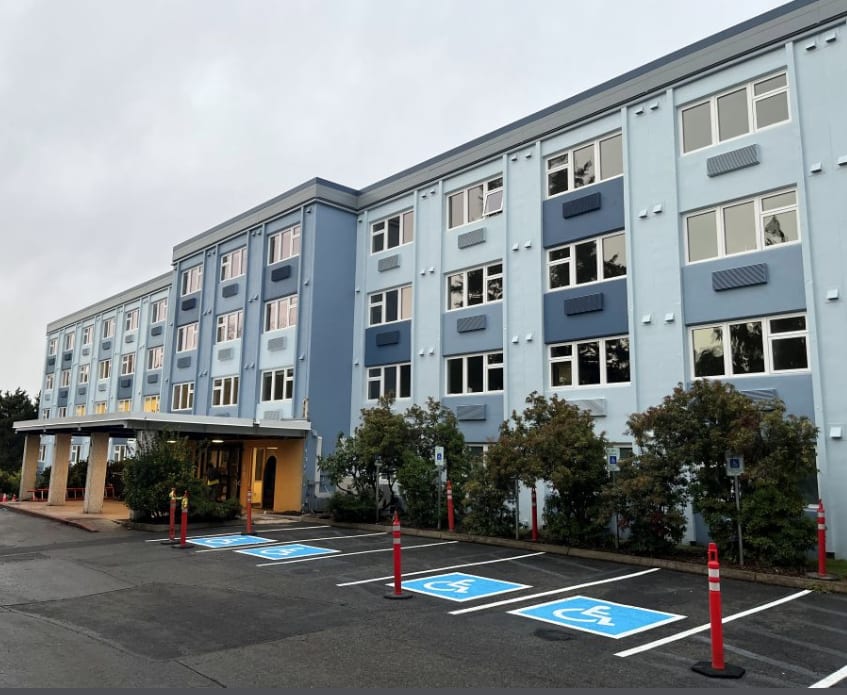
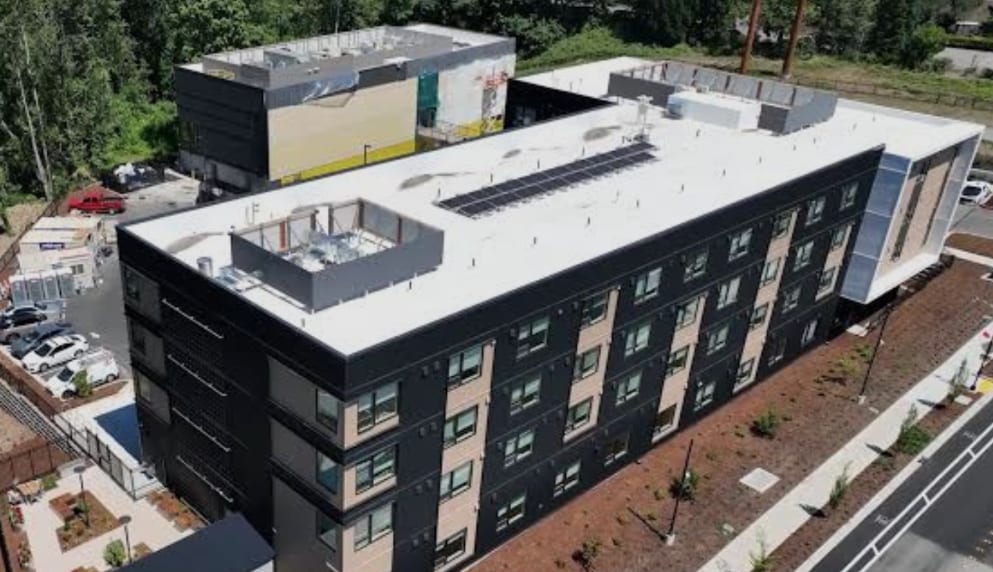
Bellevue's first permanent supportive housing building shares an Eastgate campus with the PorchLight men's shelter. The PSH building itself has a documented jump in police calls and a tenant Bellevue police tied to stolen vehicles and a high-speed flight through civilian traffic. Neighbors say the combined site has brought open drug use, camping, and fear.
- 5 → 148police calls for service
- At Plymouth Crossing, from the second half of 2023 to 2024. Calls within a half-mile rose from 609 to 1,082. These are calls for service, not 148 proven crimes.
- 92PSH apartments
- Permanent apartments beside PorchLight, which serves 800+ shelter clients a year. Plymouth says most of its own emergency calls are medical, still a concentrated load on Bellevue first responders.
Impacts on the surrounding community
- Bellevue police calls for service at Plymouth Crossing rose from 5 in the second half of 2023 to 148 in 2024, and from 609 to 1,082 within a half-mile. Plymouth's own account says more than 90% of emergency calls are medical and that on-site specialists distribute Narcan. Either way, the building concentrates emergency response beside homes and businesses.
- The impact is not only medical. Bellevue police tied a tenant, who had 57 prior warrants, to stolen vehicles recovered in the Plymouth Crossing lot, identity theft, and a daytime high-speed flight in which civilians had to swerve to avoid a head-on collision. Asked about that case, Plymouth said tenancy decisions weigh building safety and what the law allows, and declined to say whether he would be removed.
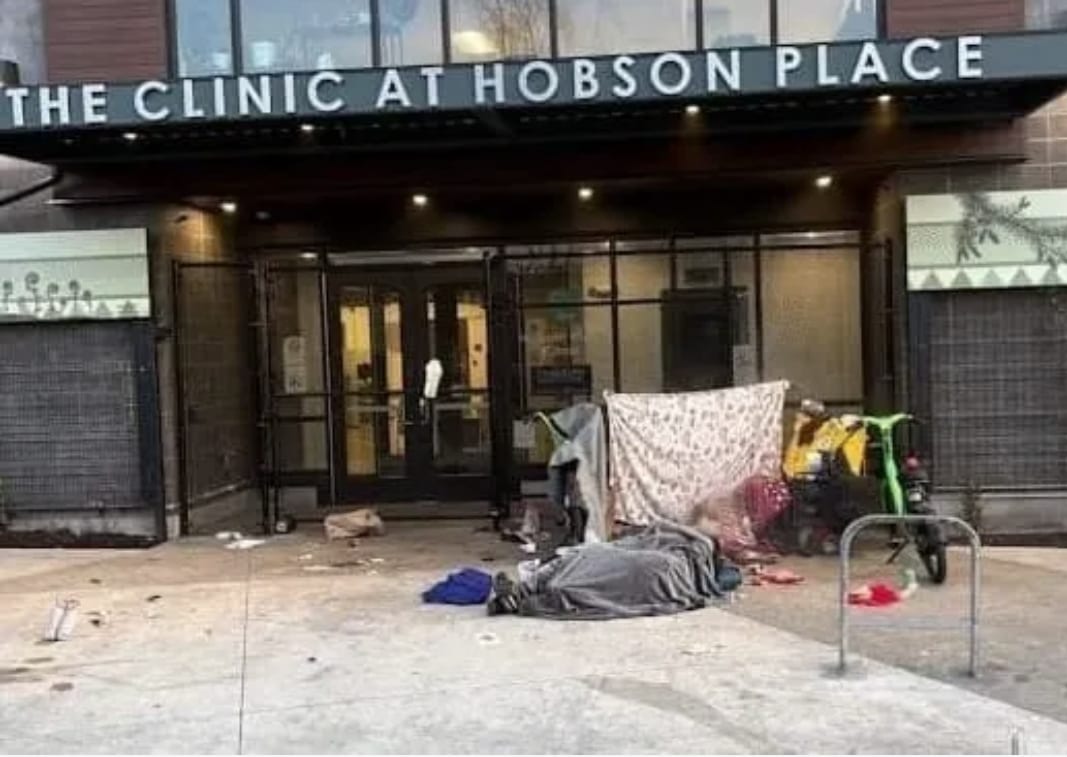
- Neighbors live with the adjacent PorchLight shelter as the same campus. They report everyday open drug use at the bus stop and camping through Eastgate and Factoria. A man who had been staying at PorchLight was charged with beating to death another person who had also been kicked out of the shelter; the killing was at a nearby campsite. Bellevue then presented an action plan, and lengthened shelter bans for code violations, to reduce those neighborhood impacts.